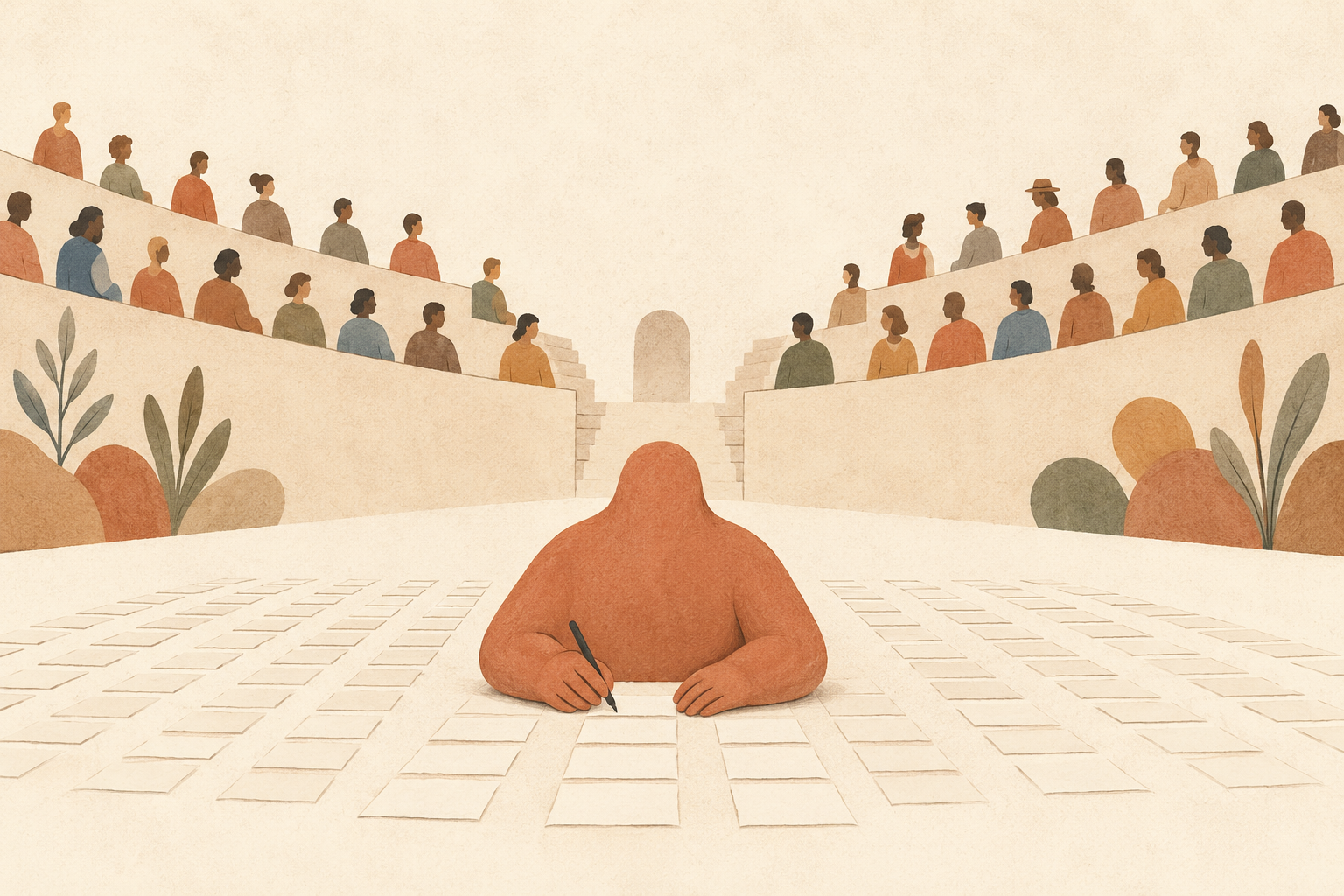
It’s exam season right now. Watching you do your homework tonight, I thought of something I came across earlier today, and I want to tell you about it.
The moment this year’s exams ended, someone rounded up twelve of the most powerful AIs and had them sit this year’s Chinese and math papers. The national exam, the real questions. They even brought in a few real teachers to grade the papers blind, working late into the night. The result: the top nine finished within two points of one another, and on math almost all of them scored full marks. They just got there by different routes.
By the time you’re old enough to walk into that exam room, this will probably have gone further still. By then, having an AI sit the Gaokao, China’s college entrance exam, may have become too boring for anyone to bother testing, the way no one today checks whether a calculator can multiply.
You may find it hard to picture how my generation grew up. Back then people used to say one point was a whole stadium of people. Score one point lower, and that entire crowd standing on the field moves ahead of you. A single number could decide which city you’d live in, who your classmates would be, whose life you’d end up living. So we drilled the one skill of answering questions until it was bone-deep.
To be fair, the Gaokao was the fairest exam we could find. But even its fairness had its edges. Born into different provinces, you faced different odds; some kids gave it everything they had only to reach where others began, and some moved their household registration, moved house, just to trade for an easier exam room. We saw all of it, and we made our peace with it. Imperfect as it was, it was still one of the few rules of that era that kept its word.
By your generation, though, even the questions have changed. Who can remember more, or calculate faster, is no longer a contest for humans. The good news is that it also means you won’t have to do what we did, and stake your whole youth on a single sheet of paper.
There’s one detail from that AI exam I especially want to tell you about.
On math they scored nearly full marks, but the essay was the one place the teachers found fault. The comments kept circling back to the same few lines: the form unclear, the point vague, the argument thin, too little connection to the times we live in.
You see, a machine can crack the hardest geometry, and still it hasn’t truly learned to think a thing through, or to say an idea in a way that reaches into someone’s heart. That is exactly the part no exam can score, the part that is most human.
There’s something else a machine can’t do. When an AI gets a question right, nothing inside it changes. You do. In the moment you truly understand a problem, a small patch of the world turns clear before your eyes. That is what learning really is. The score is only a by-product.
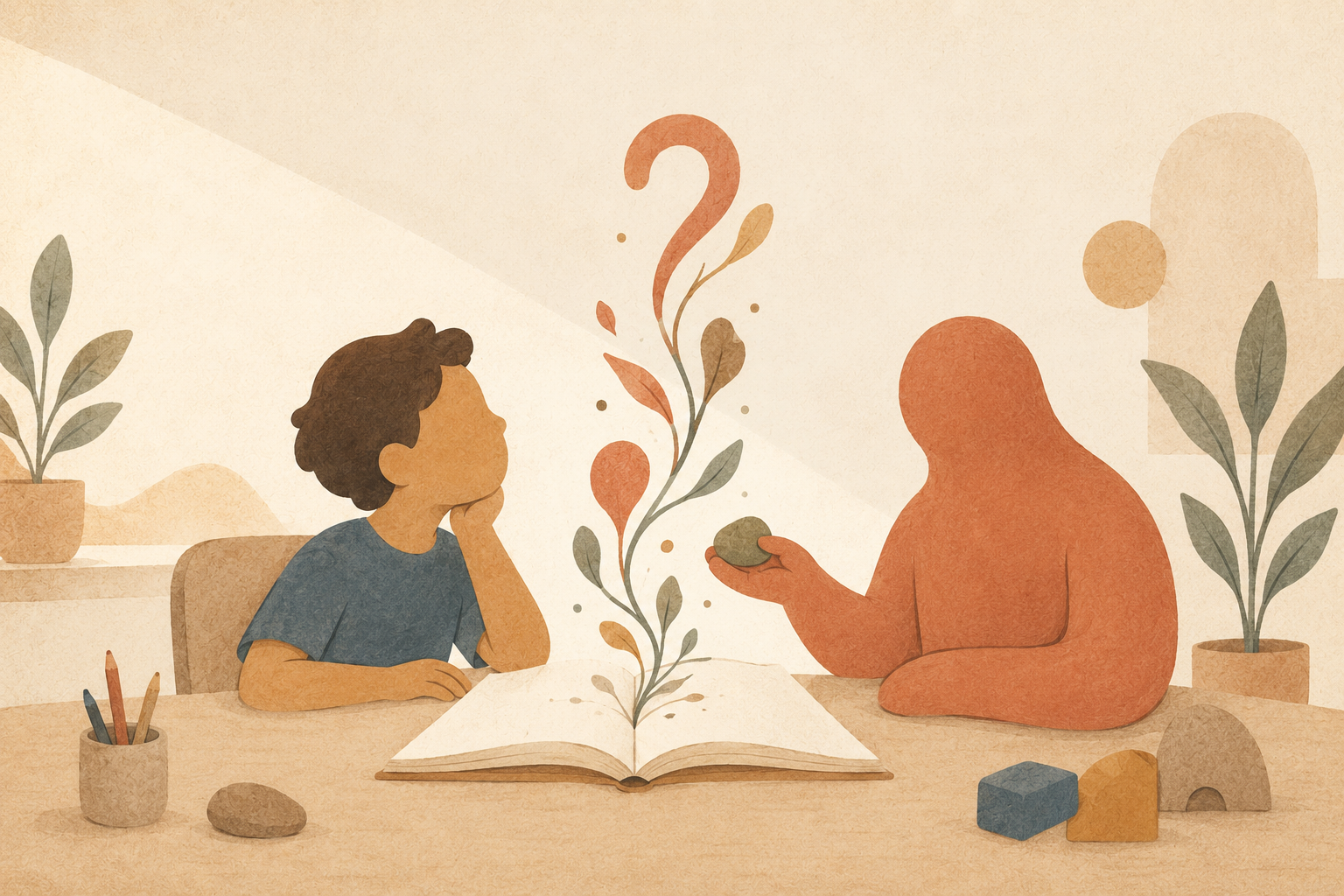
So my guess is that by the time you grow up, the real main subjects will be two: the ability to think, and the ability to say what you think. First get it clear in your own head, then put it in a way people want to hear, can follow, and will remember. Machines are still a breath short of this, and that breath is worth a lifetime of practice.
Around these two, I want to give you three small lessons.
The first is asking questions. Your world runs on a new kind of pricing: answers are free, and questions are expensive. A question is where thinking starts, and asking a sharp one, asking a deep one, is something no machine can do for you.
The second is taste. An AI will hand you a hundred versions; which one you choose, and why you turn down the other ninety-nine, comes down to your taste. There’s no crash course for it. It’s gathered slowly, from a line of a poem that catches you off guard, a book you can’t bear to finish, a conversation that leaves you sitting there stunned. Collect enough of these fleeting glimpses and you’ll come to know good work when you meet it.
The third is working with AI. Treat it as a lever: hand off the dull, repetitive parts, and save your strength for what only a person can do. What you hand over is the doing; what stays in your hands is the deciding. And there’s one thing you can never hand over, which is your name. Whatever the AI writes for you still goes out under your name. Look after your good name; being a little slower, a little clumsier, doesn’t matter at all.
You’ll still need to learn, and learn it solidly. You have to know enough before you can tell whether the AI is right, before you can ask a question with any weight to it. The foundation is still yours to lay, brick by brick; it’s just that once it’s laid, the building you raise will look nothing like the ones my generation built.
So if there’s ever a day you’re hurting over a score, let me tell you ahead of time: the real rival of your life was never that exam paper, and it isn’t the machine either.
All you have to do is grow, slowly, into the kind of person a machine can’t be: someone who thinks, who asks, who speaks, who has their own loves, who looks after their good name, and who can take something they truly care about and make it both clear and moving.
By that day, no one will ask you what you scored on the Gaokao.
But everyone who meets you will remember the kind of person you are.